Tag: SEO automation tools

  • IndexNow Integration for Faster WordPress Indexing

    IndexNow Integration for Faster WordPress Indexing

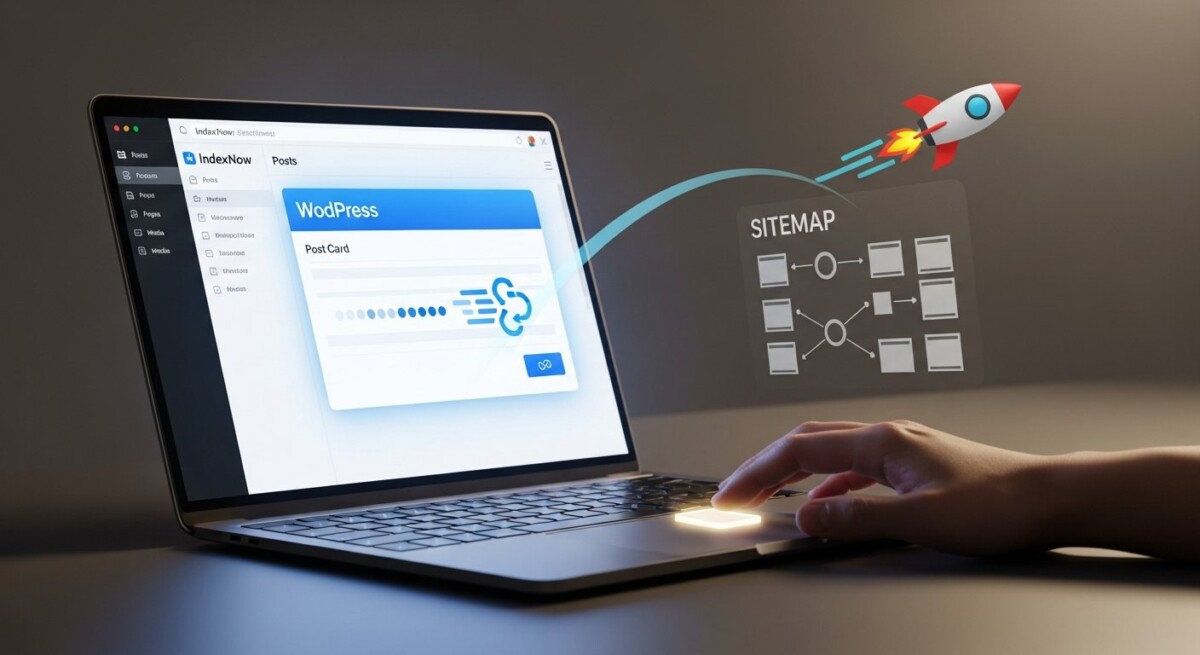
    Getting your fresh content discovered by search engines can feel like waiting for a letter to arrive by post. You hit publish on a new blog post, but days or even weeks pass before Google notices it exists. This delay costs you traffic, leads, and revenue. IndexNow integration changes that equation entirely. By implementing this protocol, you tell search engines the exact moment new content appears, slashing indexing time from weeks to minutes. For WordPress site owners who publish frequently, this is not a luxury. It is a necessity for staying competitive in search results.

    What Is IndexNow and Why Does It Matter?

    IndexNow is an open-source protocol that allows websites to instantly notify search engines about content changes. When you publish or update a page, IndexNow sends a simple ping to participating search engines. These engines then crawl and index that URL almost immediately. The protocol was developed by Microsoft Bing and later adopted by Yandex, Seznam, and others. Google does not natively support IndexNow, but the protocol still accelerates discovery through other major engines and indirectly influences Google’s crawl rate through increased site activity signals.

    The importance of this protocol for WordPress sites cannot be overstated. Traditional indexing relies on search engine crawlers discovering your sitemap during periodic visits. If your site updates infrequently, crawlers might return only once every few days or weeks. With IndexNow, you remove that waiting period. Every new post, every updated page, and every content refresh triggers an immediate notification. This is especially valuable for news sites, affiliate marketers, and agencies managing multiple client sites where timely indexing directly impacts revenue.

    How IndexNow Integration Works in WordPress

    IndexNow integration requires three core components: a verified API key, a mechanism to trigger notifications, and a plugin or service that handles the communication. The protocol itself is simple. You generate a unique API key, host it at a specific URL on your domain, and then send HTTP requests to participating search engines whenever content changes. WordPress plugins automate this entire process, making integration nearly effortless for site owners.

    Step-by-Step Integration Process

    First, you need to generate your IndexNow API key. Most plugins handle this automatically, but you can also create one manually through Bing Webmaster Tools. The key is a simple string of characters that proves ownership of your domain. You must host this key at . Search engines check this file to verify that the notifications come from an authorized source.

    Second, install a WordPress plugin that supports IndexNow. Several free and premium options exist, including Rank Math SEO, All in One SEO, and dedicated IndexNow plugins. These plugins automatically send notifications whenever you publish, update, or delete a post. They also handle the API key generation and hosting, removing any technical barriers.

    Third, verify that your notifications are working. Most plugins include a log or status screen where you can see recent IndexNow submissions. You can also test manually by using online IndexNow testing tools. A successful submission returns a 200 OK status, while errors indicate configuration issues that need troubleshooting.

    Key Benefits of IndexNow for WordPress Content Indexing

    The primary benefit is speed. Content indexed via IndexNow appears in search results within minutes instead of days. This matters most for time-sensitive content like breaking news, product launches, or limited-time offers. But even evergreen content benefits from faster indexing because it accelerates the SEO feedback loop. You can publish, monitor performance, and iterate much faster when indexing happens in real time.

    Another major advantage is reduced server load. Traditional crawling puts strain on your server as search engine bots request multiple pages during each visit. IndexNow replaces bulk crawls with targeted, single-URL notifications. Your server handles fewer requests, which improves performance for real visitors. This is particularly beneficial for shared hosting environments where server resources are limited.

    IndexNow also improves content freshness signals. Search engines prioritize recently updated content in their algorithms. By notifying them instantly, you signal that your site is active and maintained. Over time, this can improve your overall domain authority and search rankings. Sites that implement IndexNow often see a measurable increase in organic traffic within the first few weeks of adoption.

    Choosing the Right IndexNow Plugin for WordPress

    Not all IndexNow plugins are created equal. Some offer basic functionality while others integrate deeply with your existing SEO workflow. When evaluating options, consider these factors:

    • Compatibility with your SEO plugin: Ensure the IndexNow plugin works alongside your existing SEO tools without conflicts. Popular options like Rank Math and All in One SEO have built-in IndexNow support.
    • Automatic submission triggers: The plugin should automatically send notifications for new posts, updated posts, and deleted posts. Manual submission defeats the purpose of instant indexing.
    • Support for custom post types: If you use custom post types for portfolios, testimonials, or products, the plugin must include them in the submission process.
    • Logging and error reporting: A good plugin provides a submission log so you can verify that notifications are reaching search engines successfully.

    OrganicStack users benefit from built-in IndexNow integration that works across all connected sites. When you publish content through the OrganicStack platform, the system automatically sends IndexNow notifications for each URL. This eliminates the need for separate plugins and ensures consistent indexing across your entire site network. For agencies managing dozens of WordPress sites, this centralized approach saves hours of configuration time.

    IndexNow vs. Traditional Sitemap Submission

    Traditional sitemap submission remains important for initial site discovery and for providing search engines with a complete picture of your content architecture. However, sitemaps are a passive method. Search engines check them on their own schedule, which may not align with your publishing frequency. IndexNow is an active push method. You control exactly when search engines learn about your content.

    The two methods complement each other rather than compete. Use sitemaps for comprehensive content discovery and structural signals. Use IndexNow for real-time notifications of new and updated content. Together, they create a robust indexing strategy that maximizes both coverage and speed. WordPress sites that implement both methods see the best results, with new content indexed in minutes and older content recrawled periodically through sitemap signals.

    One common misconception is that IndexNow replaces the need for XML sitemaps entirely. This is not accurate. Sitemaps provide context about content relationships, priority, and update frequency. IndexNow only provides a notification. Search engines still rely on sitemaps to understand your site structure. Maintain both for optimal performance.

    IndexNow and Multi-Site WordPress Management

    For agencies and power users managing multiple WordPress sites, IndexNow becomes even more valuable. Each site requires its own API key and configuration. Manually setting this up across dozens of sites creates significant overhead. This is where platforms like OrganicStack provide clear advantages. The centralized dashboard manages IndexNow keys for all connected sites, ensuring every site benefits from instant indexing without individual setup.

    Multi-site management also introduces the challenge of coordinating content publishing across different domains. When you publish the same article on multiple sites for affiliate or network purposes, each URL needs its own IndexNow notification. OrganicStack handles this automatically, sending individual notifications for each site in your network. This ensures that all your content gets indexed quickly, regardless of how many sites you manage.

    The consistency of IndexNow integration across your site network also improves your overall SEO strategy. When all sites in your portfolio index quickly, you can compare performance data more accurately. You can identify which topics, keywords, or content formats drive the fastest rankings and adjust your strategy accordingly. Without consistent indexing, performance comparisons become unreliable because some sites may lag behind others in search engine discovery.

    Common IndexNow Integration Challenges and Solutions

    While IndexNow integration is straightforward, some challenges can arise. The most common issue is API key verification failure. This usually happens when the key file is not accessible at the correct URL or when the file contains extra whitespace or characters. Double-check the file location and content. The file must contain only the API key string with no additional text.

    Another challenge is plugin conflicts. Some security plugins or caching plugins may block the IndexNow submission requests. Check your plugin logs and temporarily disable other plugins to identify conflicts. Many caching plugins have an option to exclude certain URLs from cache, which can resolve the issue.

    Rate limiting is a less common but possible issue. Search engines may limit the number of IndexNow submissions from a single domain within a short period. If you publish large batches of content simultaneously, spread out your submissions over a few minutes. Most plugins handle this automatically by queuing submissions and sending them at a controlled rate.

    For sites using CDN or reverse proxy setups, ensure the API key file is accessible through the CDN and not blocked by any security rules. Some CDNs cache the key file, which can cause verification failures. Configure your CDN to bypass cache for the key file URL.

    Measuring the Impact of IndexNow on Your WordPress Site

    After implementing IndexNow, you should monitor several metrics to measure its impact. The most obvious is time to first indexing. Use Google Search Console, Bing Webmaster Tools, or third-party tools like Sitebulb to track how quickly new pages appear in search results. Compare this data before and after IndexNow implementation. Most users see a reduction from days to hours or minutes.

    Organic traffic changes are the ultimate measure of success. Faster indexing means your content starts generating traffic sooner. Over a month, this can translate to significant additional visits. Track your overall organic traffic trend and look for an upward shift after implementing IndexNow. Also monitor individual page performance to see which content types benefit most from faster indexing.

    Server load metrics should also improve. Fewer crawl requests from search engines mean lower CPU and memory usage on your server. Check your hosting dashboard for changes in resource usage. Reduced server load can also improve page load times for real visitors, creating a positive cycle of better user experience and higher search rankings.

    Future of IndexNow and WordPress Content Indexing

    IndexNow is still relatively new, but its adoption is growing rapidly. More search engines are joining the protocol, and major SEO tools are adding support. The protocol’s open nature means any search engine can implement it without licensing fees or complex integrations. This positions IndexNow as a potential standard for real-time content notification across the entire search ecosystem.

    For WordPress users, the trend is toward deeper integration. Future versions of WordPress core may include native IndexNow support, eliminating the need for plugins entirely. Until then, tools like OrganicStack provide the most seamless experience, especially for users managing multiple sites. The combination of automated content generation, scheduling, and IndexNow integration creates a publishing pipeline that moves from idea to indexed page in record time.

    In our guide on The Hidden Dangers of Automated WordPress Content, we explain how to avoid common pitfalls while maximizing the benefits of automation. IndexNow integration is one of the key safeguards that ensures your automated content gets discovered quickly and ranks well.

    As search engines continue to prioritize fresh content, the importance of instant indexing will only grow. Sites that implement IndexNow now gain a competitive advantage that compounds over time. Every day of faster indexing is a day of additional traffic, leads, and revenue. For WordPress site owners serious about SEO, IndexNow integration is not optional. It is a fundamental part of a modern content strategy.

  • Scale Traffic Fast: The 30-Day OrganicStack Plan

    Scale Traffic Fast: The 30-Day OrganicStack Plan

    Scaling a website from zero to significant visibility is one of the most challenging tasks in digital marketing. Most experts will tell you that search engine optimization is a long game that requires six to twelve months before you see a return on investment. While patience is a virtue in business, modern tools and strategic frameworks have accelerated the timeline significantly. The ability to build organic traffic in 30 days with OrganicStack is not just a marketing promise but a realistic goal if you adhere to a disciplined, data-driven roadmap. By leveraging the specific capabilities of the OrganicStack framework, you can condense months of traditional manual outreach and content planning into a streamlined four-week sprint.

    The core difference between traditional SEO and the OrganicStack approach lies in integration. In a standard workflow, a marketer might use one tool for keyword research, another for content drafting, and a third for technical auditing. This fragmentation leads to data silos and lost time. OrganicStack unifies these processes, allowing you to move from ideation to indexation rapidly. This guide provides a comprehensive blueprint for utilizing this stack to its full potential, ensuring that every piece of content you publish works harder to attract qualified visitors. You are not just writing blog posts; you are engineering a traffic ecosystem designed to signal authority to search engines immediately.

    The OrganicStack Advantage in Modern SEO

    To understand how to execute this 30-day plan effectively, you must first grasp the mechanics of the platform. OrganicStack operates on the principle of semantic relevance and technical precision. Search engines like Google have evolved beyond simple keyword matching. They now look for topical authority and user experience signals. OrganicStack automates the heavy lifting of identifying these signals, allowing you to focus on strategy rather than spreadsheet management. It analyzes the competitive landscape to find gaps where your domain can gain a foothold quickly, rather than competing for high-difficulty terms that established giants dominate.

    Efficiency is the primary driver of this system. When you attempt to build organic traffic in 30 days with OrganicStack, you are essentially using technology to bypass the trial-and-error phase. The platform helps you identify low-competition, high-intent keywords that are currently underserved. By targeting these specific queries, you can achieve rankings much faster than by targeting broad, generic terms. Furthermore, the stack ensures that your site architecture supports these rankings by creating logical internal linking structures automatically. This signals to search engine crawlers that your site is a comprehensive resource on your chosen subject matter.

    Week 1: Architecture and Keyword Intelligence

    The first seven days of your journey are critical for laying a foundation that can support rapid growth. You cannot build a skyscraper on quicksand, and you cannot build organic traffic without a technically sound website. The first step involves a comprehensive audit using OrganicStack’s technical tools. You need to identify and fix crawl errors, broken links, and slow-loading pages immediately. Speed and accessibility are prerequisites for ranking; if search engines cannot crawl your site efficiently, your content efforts will be wasted. During this week, you will also configure your sitemaps and ensure that your robots.txt file is optimized to allow full access to your most important assets.

    Once the technical baseline is established, you shift your focus to aggressive keyword intelligence. This goes beyond looking for terms with high search volume. You are looking for ‘opportunity keywords’ that have a specific ratio of volume to difficulty. OrganicStack specializes in uncovering these hidden gems. You should spend the bulk of your time in the research module, filtering for long-tail keywords that demonstrate commercial intent or specific informational needs. The goal is to create a list of thirty to fifty primary keywords that will serve as the backbone of your content strategy for the month.

    When selecting your keywords during this initial phase, prioritize them based on the following criteria to ensure immediate traction:

    • Relevance to Core Offer: Ensure the keyword is directly tied to a solution you provide to avoid high bounce rates.
    • Search Intent Alignment: Focus on transactional or specific informational queries rather than vague, navigational terms.
    • Competitive Gap Analysis: Target keywords where the current top-ranking pages are thin, outdated, or poorly optimized.
    • Volume-to-Difficulty Ratio: Look for keywords with at least 100 monthly searches and a difficulty score that matches your current domain authority.

    After finalizing your keyword list, you will map these keywords to specific page types. Some will require long-form guides, while others may be better suited for product pages or comparison articles. OrganicStack allows you to tag and categorize these keywords, effectively creating a content calendar that is pre-validated by data. By the end of Week 1, you should have a technically healthy site and a prioritized roadmap of exactly what content needs to be produced to start driving traffic.

    Week 2: Content Velocity and Strategic Clustering

    Week 2 is about execution and volume. To build organic traffic in 30 days with OrganicStack, you must produce content at a velocity that signals activity to search engines. However, speed should not come at the expense of quality. This is where the platform’s content optimization features become indispensable. You will use the outlined keywords from Week 1 to generate comprehensive content briefs. These briefs ensure that every article you write covers the topic depth required to rank. The goal is to publish a cluster of related content rather than isolated posts.

    Mastering Topic Clusters

    The most effective way to gain authority quickly is through topic clustering. This involves creating a central ‘pillar’ page that covers a broad topic extensively, surrounded by ‘cluster’ pages that address specific sub-topics. For example, if your pillar page is about ‘Digital Marketing,’ your cluster pages might cover ‘Email Marketing Tips,’ ‘SEO Basics,’ and ‘Social Media Strategy.’ OrganicStack facilitates this by suggesting internal linking opportunities as you write. By linking all cluster pages back to the pillar and to each other, you create a web of relevance that search engines reward with higher rankings.

    During this production phase, consistency is key. You should aim to publish new content daily or at least every other day. OrganicStack’s workflow management tools help keep you on track by tracking word counts, keyword density, and semantic variations. It is important to write for humans first but optimize for bots. This means using clear headings, short paragraphs, and bullet points to break up text. The platform will analyze your drafts in real-time, scoring them against the top-ranking competitors for your target keywords. Do not publish until your content score meets or exceeds the competitor average. This disciplined approach ensures that every page you release has a fighting chance of reaching the first page of search results.

    Week 3: On-Page Optimization and User Experience

    With a library of content now live, Week 3 is dedicated to refinement and on-page optimization. Publishing content is only half the battle; ensuring that content converts visitors and satisfies search algorithms is the other half. You will use OrganicStack to audit your newly published pages for optimization opportunities that may have been missed during the drafting phase. This includes refining title tags, meta descriptions, and header tags to ensure maximum click-through rates (CTR). A high ranking is useless if users do not click on your result, so your meta data must be compelling and benefit-driven.

    User experience (UX) signals are becoming increasingly important ranking factors. Search engines track how users interact with your site. If they land on a page and immediately leave (pogo-sticking), it signals that the content is not relevant. To combat this, you must focus on readability and engagement elements. Use OrganicStack to analyze the dwell time and bounce rate of your initial traffic. If certain pages are underperforming, revisit the introduction to make the hook stronger, or add multimedia elements like images and videos to keep users on the page longer. This iterative process of publishing and polishing is vital for rapid growth.

    Additionally, pay close attention to the following on-page elements that OrganicStack highlights for optimization:

    • Schema Markup: Implement structured data to help search engines understand your content context and potentially win rich snippets.
    • Image Alt Text: Ensure all visual assets have descriptive, keyword-rich alt text for accessibility and image search traffic.
    • URL Structure: Keep URLs short, descriptive, and free of unnecessary parameters or dates.
    • Mobile Responsiveness: Verify that all text and elements render perfectly on mobile devices, as mobile-first indexing is the standard.

    By the end of Week 3, your content should be polished, professional, and optimized for both conversion and retention. You are not just trying to attract a visitor once; you are trying to create a satisfying experience that signals to Google that your site is a quality resource. This positive user behavior creates a feedback loop that further cements your rankings and drives more organic traffic over time.

    Week 4: Amplification and Authority Building

    The final week of the 30-day sprint focuses on off-page factors and amplification. Even the best content needs a push to get started. While you wait for organic rankings to mature, you can accelerate the process by building authority signals. OrganicStack often includes features or integrations that assist with outreach and backlink analysis. Your goal is to acquire high-quality backlinks from reputable sites in your niche. A backlink acts as a vote of confidence; the more reputable ‘votes’ you have, the more authoritative your site appears to search engines.

    Start by identifying non-competing websites that share your audience. Use OrganicStack to analyze their backlink profiles and find broken link opportunities or guest posting gaps. Reach out to these site owners with personalized pitches. Since you have spent the last two weeks creating high-quality, data-backed content, your pitch will be much stronger. You are not asking for a favor; you are offering a valuable resource that their audience will appreciate. Even a handful of relevant backlinks secured in this final week can significantly boost the ranking potential of your entire domain.

    Social signals also play a role in amplification. Share your content across all your active social media channels. While social shares are not a direct ranking factor, they drive referral traffic and increase the likelihood of earning natural backlinks. OrganicStack can help you track which channels are driving the most engaged visitors. Use this data to double down on the platforms that work best. The surge in referral traffic sends positive signals to search engines regarding the popularity and relevance of your content, which can speed up the indexing and ranking process.

    Measuring Success and Iterating for the Future

    As you reach the end of the 30-day period, it is time to review the analytics dashboard within OrganicStack. You should see a clear upward trend in impressions and clicks. Do not be discouraged if traffic is not yet at viral levels; the goal of the first month is to establish a trajectory. Look at which keywords are starting to rank on the second or third page. These are your low-hanging fruits for the next month. By optimizing these specific pages further, you can push them onto the first page and unlock substantial traffic gains.

    The process to build organic traffic in 30 days with OrganicStack is intense, but it establishes a system that serves you for years. You have moved from a static website to a dynamic publishing engine. The discipline you cultivated during this month,technical auditing, keyword intelligence, clustered content creation, and active distribution,should become your standard operating procedure. SEO is cumulative. The work you did in Week 1 will continue to compound in value during Month 2, Month 3, and beyond. By sticking to this framework, you ensure that your traffic growth is not a lucky spike, but a sustainable rise.