
Tag: organic search growth

  • How to Improve Online Search Visibility for Measurable Growth

    How to Improve Online Search Visibility for Measurable Growth

    In today’s crowded digital landscape, being found is the first and most critical battle. For operators and agencies focused on scale and control, online search visibility is not a vanity metric, it is the fundamental engine of sustainable, measurable growth. It is the difference between a brilliant digital asset that sits in the dark and one that consistently attracts qualified traffic, builds authority, and drives business outcomes. Improving this visibility requires moving beyond basic tactics to a systematic, holistic strategy that aligns technical precision with user-centric value creation. This approach transforms search from a channel into a core component of your operational infrastructure.

    Laying the Technical Foundation for Crawlability and Indexability

    Before you can rank for anything, search engines must be able to find, read, and understand your content. This foundational layer is non-negotiable for enterprise-scale operations where site architecture can be complex. A technically flawed site is like a store with a locked door and no signage, no matter how good the products inside are. The process begins with a comprehensive technical audit. This audit should map your entire site structure, identify crawl budget inefficiencies, and flag barriers that prevent search engine bots from accessing your key pages. Common issues include broken links, improper use of the robots.txt file, slow server response times, and pages blocked by noindex tags unintentionally.

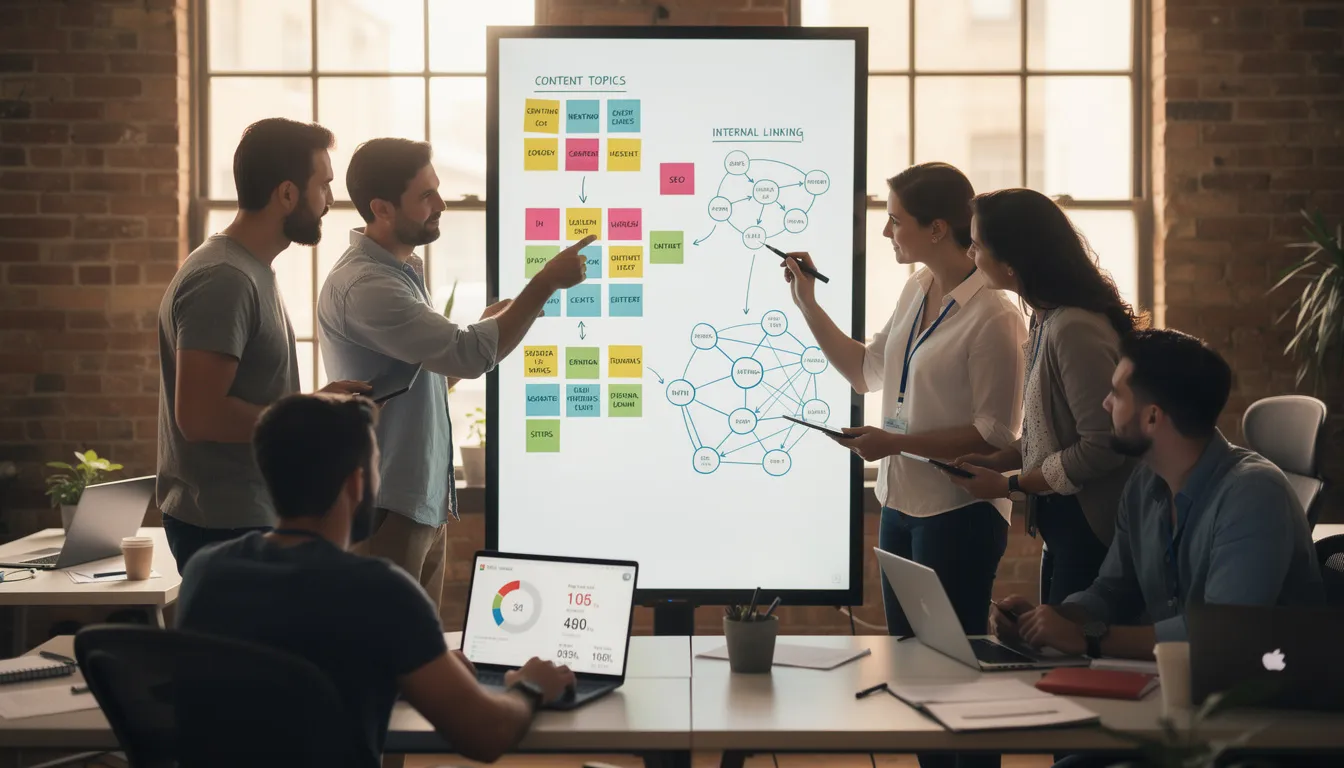
    For agencies managing multiple client sites or large content hubs, implementing a robust site architecture is paramount. A flat, logical structure where important pages are no more than three clicks from the homepage ensures equity flows efficiently. This is complemented by a strategic internal linking strategy that acts as a guide, both for users and crawlers, signaling which pages are most important and how content is thematically related. Furthermore, ensuring your site is built on a mobile-first framework is no longer optional. With Google’s mobile-first indexing, the mobile version of your site is the primary version used for ranking. Page speed, responsive design, and accessible interactive elements are direct ranking factors and critical to user experience.

    Mastering Keyword Strategy and Search Intent Alignment

    With a solid technical base, the next pillar is understanding what your target audience is searching for and why. Keyword research is the compass, but search intent is the map. The goal is not to chase the highest-volume keywords blindly, but to identify the terms and phrases that represent commercial or informational value for your business and align perfectly with user goals. This requires a layered approach. Start with broad seed keywords related to your core offerings, then use research tools to expand into long-tail variations, question-based queries, and semantic clusters. For an agency or B2B service, this might mean targeting “enterprise SEO audit process” instead of just “SEO,” capturing a user with clear commercial intent.

    The critical evolution in this process is intent classification. Every search query falls into a core intent category: informational (seeking knowledge), navigational (looking for a specific site), commercial (researching before a purchase), or transactional (ready to buy). Your content must satisfy this intent to have any chance of ranking highly. Creating a detailed blog post for a transactional query will fail, just as a thin product page will fail for an informational “how-to” query. To execute this effectively, follow a structured process.

    First, analyze the current top 10 results for your target keyword to reverse-engineer the dominant intent. Then, create content that not only matches but exceeds the quality and comprehensiveness of those results. Finally, structure your content to directly answer the user’s query, using clear headings and a logical flow. For example, a page targeting “improve online search visibility” should provide a actionable framework, not just a definition.

    1. Analyze the SERP: Review the top 10 results. Are they blog posts, product pages, or directories? This reveals user intent.
    2. Cluster by Topic: Group related keywords and questions to create comprehensive content hubs, not isolated pages.
    3. Prioritize by Value: Balance search volume with difficulty and, most importantly, alignment to your business goals.
    4. Map to Content Type: Assign intent to specific content formats (guide, comparison, case study, service page).
    5. Create and Optimize: Develop the asset, ensuring the primary keyword and its variants are naturally integrated into titles, headers, and body copy.

    Creating and Optimizing High-Value, Authority-Building Content

    Content is the asset that fulfills the promise of your technical and keyword work. In a search ecosystem increasingly geared towards rewarding Expertise, Authoritativeness, and and Trustworthiness (EAT), and its evolution, Experience, content must demonstrate deep subject mastery and provide genuine utility. The era of thin, keyword-stuffed articles is over. For operators, this means content must be architected as a scalable asset that continues to attract links, shares, and rankings over time. This begins with a commitment to depth and originality. Your content should aim to be the single most useful resource on its topic, combining unique data, expert insights, actionable frameworks, and clear presentation.

    On-page optimization is the layer that makes this high-quality content legible to search engines. This includes strategic placement of your target keyword in the title tag (the single most important on-page element), the H1 header, and early in the body content. Meta descriptions, while not a direct ranking factor, influence click-through rates from the SERP and should be compelling summaries. Use header tags (H2, H3) to create a clear content hierarchy that improves readability for users and helps search engines understand context. Furthermore, optimize all multimedia elements. Images and videos should have descriptive file names and include alt text that accurately describes the visual content, enhancing accessibility and providing another semantic signal.

    Perhaps the most powerful content strategy for building authority is the cornerstone content or pillar page model. This involves creating a comprehensive, top-level page on a broad topic (e.g., “The Complete Guide to Digital Growth Operations”) and supporting it with a cluster of more specific, interlinked articles on subtopics (e.g., “Technical SEO for Enterprise Sites,” “Content Operations Workflow,” “Analytics for Measurable Growth”). This structure explicitly signals topic authority to search engines and creates a superior user experience that keeps visitors engaged within your site ecosystem.

    Building Authority Through Strategic Link Acquisition and Signals

    Backlinks from other reputable websites remain one of the strongest external signals of trust and authority in search algorithms. They are essentially votes of confidence. For agencies and enterprises, a scalable link-building strategy must focus on quality and relevance over quantity. Earning these links requires a shift from outreach to value creation. The most sustainable method is to create link-worthy assets mentioned in the previous section. These are data-driven studies, original research, definitive guides, or unique tools that provide exceptional value and naturally attract citations.

    Strategic digital PR, where you leverage insights from your content to contribute expert commentary to industry publications, is another effective channel. Building relationships with publishers and journalists in your niche can lead to high-authority mentions and links. Additionally, auditing your existing backlink profile is crucial. Use analytics tools to identify your current linking domains, disavow any toxic or spammy links that could harm your site’s reputation, and find opportunities for unlinked brand mentions where you can request a link. Remember, authority is also signaled through user engagement metrics like dwell time, bounce rate, and pogo-sticking. Creating a compelling, useful experience directly influences these behavioral signals, which search engines use to infer quality.

    Measuring, Iterating, and Scaling for Continuous Growth

    For a performance-driven operation, visibility efforts are worthless without measurement. You must establish a clear analytics framework that connects search activity to business outcomes. This goes beyond tracking keyword rankings. Core metrics to monitor in a platform like Google Analytics 4 and Google Search Console include organic traffic volume, click-through rates (CTR) for your key pages, average position trends, and, most importantly, conversion rates from organic search. Set up goal tracking for meaningful actions: lead form submissions, content downloads, consultation requests, or product purchases.

    Use this data in a continuous feedback loop. Analyze which content pieces are driving not just traffic, but engaged traffic and conversions. Identify keywords where you rank on page two, as these present the fastest opportunities to improve online search visibility with targeted content updates and link-building efforts. Regular content audits are essential. Older, high-performing content should be systematically updated to keep it current and comprehensive, a process that can often yield quick ranking improvements. For agencies managing client portfolios, this data-driven, iterative approach provides the “measurable growth” that demonstrates clear ROI and justifies ongoing investment. It transforms search from a project into a scalable, repeatable process integrated into the digital roadmap.

    Ultimately, improving online search visibility is a marathon, not a sprint. It demands a balanced, integrated application of technical excellence, intent-driven content, and authoritative signals, all guided by relentless data analysis. By treating search visibility as a core component of your operational stack, you build a durable asset that generates predictable, scalable, and measurable growth for the long term.
  • OrganicStack 30-Day Plan: Roadmap To Higher SEO Traffic

    OrganicStack 30-Day Plan: Roadmap To Higher SEO Traffic

    Search engine optimization often feels like a moving target where the rules change just as you begin to understand the game. Many website owners and marketing managers struggle to gain traction because they apply tactics sporadically rather than building a cohesive system. The OrganicStack 30-day plan for boosting SEO traffic is designed to solve this fragmentation by layering essential strategies into a single, cumulative month of action. This approach treats your organic presence as a stack of interconnected layers, starting with a solid technical foundation and moving upward through content strategy, on-page optimization, and authority building. By committing to a structured timeline, you move away from reactive fixes and toward a proactive growth engine that compounds value over time.

    The philosophy behind this thirty-day sprint is not about cheating the algorithm or finding a temporary loophole. Instead, it focuses on density and relevance. Search engines like Google reward sites that demonstrate expertise, authority, and trustworthiness (E-E-A-T) consistently. The OrganicStack methodology breaks down the overwhelming mountain of SEO tasks into manageable phases. This prevents analysis paralysis and ensures that every action taken during the month contributes directly to the overall goal of increased visibility. Whether you are managing a new blog or an established e-commerce site, adhering to this schedule forces you to address the neglected corners of your digital footprint that often hold back performance.

    Phase 1: Solidifying The Technical Foundation (Days 1-7)

    The first week of the OrganicStack 30-day plan for boosting SEO traffic is strictly dedicated to infrastructure. You cannot build a skyscraper on a swamp, and you cannot build high-traffic rankings on a broken website. Technical SEO is the bedrock of the OrganicStack. During these first seven days, your primary objective is to ensure that search engine bots can crawl and index your content without obstruction. This begins with a comprehensive site audit using tools like Google Search Console or third-party crawlers. You are looking for critical errors such as 404 broken links, redirect chains that dilute link equity, and server errors that prevent access entirely. Fixing these issues is not glamorous work, but it recovers lost potential immediately. Every broken link is a dead end for a user and a bot, signaling neglect to the search engine algorithms.

    Once the errors are cleared, the focus shifts to speed and mobile usability. Core Web Vitals have become a significant ranking factor, and a slow site will leak traffic regardless of how good the content is. During this phase, you must compress images, leverage browser caching, and minimize JavaScript execution. This is where the ‘stack’ concept becomes vital: you are stacking a fast load time on top of a clean crawl path. If your site takes more than three seconds to load, bounce rates skyrocket, and dwell time plummets. These user experience signals tell Google that your result is not a good answer to a query. By the end of day seven, your site should be technically sound, fast, and fully responsive on mobile devices. This clears the runway for the content work that follows.

    Another critical aspect of the first week is examining your index coverage. You need to verify that the pages you want found are actually in the index and, equally importantly, that low-value pages are excluded. Many sites suffer from index bloat, where thousands of tag pages, archives, or parameter URLs dilute the site’s overall authority. Using the ‘noindex’ tag strategically ensures that search engines focus their limited crawl budget on your high-value money pages. This hygiene work ensures that when you start pushing hard for traffic in the later phases, the engine is tuned and ready to race.

    Phase 2: Strategic Keyword And Content Mapping (Days 8-14)

    With the technical foundation secure, the second week of the OrganicStack 30-day plan for boosting SEO traffic transitions into intelligence gathering and strategy. Traffic is not created in a vacuum; it is the result of supplying the right answers to specific questions. Days 8 through 14 are about aligning your site architecture with user intent. This starts with a deep dive into keyword research, but looking beyond simple search volume. You must identify ‘low-hanging fruit’ keywords where your site is ranking on the second or third page. These are your quickest wins. By identifying these topics, you can plan to refresh that content to push it onto the first page. Concurrently, you must look for content gaps where your competitors are ranking for valuable terms that you have not yet addressed.

    This phase also requires you to map keywords to specific pages to avoid cannibalization. Keyword cannibalization occurs when multiple pages on your site compete for the same term, confusing the search engine and splitting your authority. The OrganicStack approach mandates that every page has a singular, distinct purpose. During this week, you will create a content calendar that dictates exactly which pages need to be updated and what new articles need to be written. This is not just a list of titles; it is a strategic map that defines the primary keyword, secondary semantic terms, and the specific user intent (informational, navigational, or transactional) for each URL.

    Understanding search intent is the differentiator between traffic that bounces and traffic that converts. If a user searches for ‘best running shoes,’ they are likely looking for a comparison guide, not a product homepage. If they search for ‘buy running shoes size 10,’ they want a product page. Misaligning your content type with user intent is a common failure point. During this strategic week, you review your top landing pages to ensure they actually deliver what the searcher is seeking. If the intent match is off, no amount of backlinks will sustain your rankings. By the end of the second week, you should have a clear blueprint of what content needs to be produced or polished.

    Phase 3: Execution And On-Page Optimization (Days 15-23)

    The third phase is the heavy lifting period where strategy turns into tangible assets. This is the longest phase of the plan because creating high-quality, optimized content takes time and effort. Execution involves writing new articles based on the gaps identified in Phase 2 and rewriting underperforming content to better satisfy user intent. The OrganicStack 30-day plan for boosting SEO traffic emphasizes ‘stacking’ on-page signals. This means you are not just writing text; you are optimizing the title tags, meta descriptions, header hierarchy (H1, H2, H3), and image alt text simultaneously. Every element of the page must sing in harmony to reinforce the main topic.

    One major component of this execution phase is improving the readability and structure of your content. Modern users scan content before they read it. If your pages are walls of text without breaks, users will leave. You must incorporate bullet points, numbered lists, bold text for emphasis, and relevant images or videos to break up the flow. This increases ‘dwell time,’ a metric that indicates to search engines that users are finding value in your content. Furthermore, this is the time to implement schema markup. Schema is code that helps search engines understand the context of your content, leading to rich snippets in search results (like star ratings or recipe times) which can drastically improve click-through rates.

    To ensure you are maximizing the value of every page published or updated during this sprint, it is helpful to follow a strict optimization checklist. This ensures consistency across your site and prevents small but crucial details from being overlooked in the rush of content creation.

    • Keyword Placement: Ensure the primary keyword appears in the URL, the H1 tag, the first 100 words of the content, and naturally throughout the body.
    • Internal Linking: Link to at least three other relevant pages on your site to pass authority and keep users engaged longer.
    • External Sourcing: Include 1-2 outbound links to high-authority, non-competitor sites to show Google you have done your research and are part of the larger web ecosystem.
    • Media Optimization: Verify that all images have descriptive file names and alt text that includes semantic variations of your target keywords.
    • Mobile formatting: Check the preview on a mobile device to ensure paragraphs are short and buttons are easily clickable.

    Following this checklist for every single piece of content touched during the third week creates a standard of quality that accumulates over time. It transforms a random collection of blog posts into a cohesive library of information. This discipline is what separates amateur blogs from authoritative publications. By day 23, your site should feature fresh, optimized content that is technically sound and perfectly aligned with what your audience is searching for.

    Phase 4: Authority Building And Distribution (Days 24-30)

    The final week of the OrganicStack 30-day plan for boosting SEO traffic focuses on off-page signals and distribution. You have built the car and filled it with fuel; now you need to drive it onto the highway. Content that sits in isolation rarely ranks well. You must build bridges to it. This starts with a robust internal linking campaign. While you added some links during the writing phase, this week is about looking at your site holistically. You should find your most authoritative pages (usually the home page or older, popular posts) and link them to the new content you created in Phase 3. This distributes ‘link juice’ throughout your site, helping new pages get indexed and ranked faster.

    External promotion is the next layer of the stack. This involves sharing your content across social media channels, email newsletters, and relevant industry forums. While social signals are not a direct ranking factor, the traffic they generate sends positive user behavior signals to search engines. If real people are visiting, reading, and sharing your content, Google takes notice. Additionally, this is the time to initiate outreach for backlinks. You can contact other site owners who have linked to similar (but inferior) content and suggest your new, comprehensive resource as a replacement or addition. This requires a personalized approach, but even a handful of high-quality backlinks can significantly move the needle.

    Finally, the last few days of the month are for monitoring and adjustment. You should install or check your analytics setup to ensure you are tracking the right metrics. Look for early signs of movement in impressions and clicks. SEO is a lagging indicator, meaning the work you do today might not show full results for weeks or months, but early trends can validate your direction. Use this time to document what worked well during the 30-day sprint and what bottlenecks you encountered. This reflection allows you to refine the process for the next cycle.

    Implementing the OrganicStack 30-day plan for boosting SEO traffic is an intense process, but it builds a resilient asset that continues to pay dividends long after the month ends. By systematically addressing technical health, content strategy, on-page execution, and authority building, you remove the guesswork from organic growth. This roadmap provides clarity and discipline, two attributes often missing in digital marketing strategies. The end of the thirty days is not the finish line; it is the establishment of a new baseline of quality. From here, you can repeat the cycle, targeting new keywords and further refining your technical stack, secure in the knowledge that you are building on solid ground.